Chinchilla Cages, Information and Resources
If you're new to having multiple chinchillas, the chinchilla mansion cage may be just what you need for great chinchilla care and fun.Click here for details.
I know it takes a while…quite a while for a chinchilla to trust people…and I’m sure the fact that baby Skiba was taken away from her mother a week ago does not help with her confusion…I know that with time and patience we can bond…i’m just worried about her getting enough excercise in the meantime. Chinchillas are supposed to be out of their cage about an hour each night(so I have read). But she’s so frightened that when open her cage she hides…she comes out eventually sometimes but only to hide under things…also…as far as dust baths, how should i get her to go about having one without me seeming to pressure her therefore scaring her…i just want what is best for my little chinchilla!
…also, i just read that you shouldn’t let a chinchilla out of its cage to explore its new home for a minimum of 2 weeks. Skiba’s been out a few times, but doesn’t seem to enjoy it. I know that chins supposedly have v good memories…i just don’t wanna traumatize her…is it o.k. if we hold of from extra-cage adventures for a while…???
For the dust bath, just place the container in the cage, close the door and step away from the cage. Just stand there and watch, but don’t talk to her or make any noises. Be patient! Once she does go in the container let her play in it for about an hour, this way she knows it’s ok and it’s hers. This also puts her scent on it. NEVER leave the dust in the cage all the time because your chinchilla will use it as her bathroom. Dust isn’t good for the fur if she rolls in it too much. It will dry her fur out and cause her to lose her fur.
It is perfectly fine to take the chinchilla out of the cage. Every chinchilla born here or that I rescue, I immediately start letting them get accustomed with me. To do this, take the chinchilla in the bathroom, making sure the toilet lid is down, bathtub dried out, and pickup or block anything the chinchilla can hide under/behind/in (this means behind the toilet). Let the chinchilla explore while your laying on the floor or sitting on the floor. Take some treats with you (raisins, dried cranberries, posted shredded wheat’s cereal) and give the chinchilla a treat every time it comes near you so she knows your not going to hurt her in any way. This let’s her become familiarized with you in a good way. Let her run around for 30 minutes, then place her in her cage for 1 hour to rest, eat and drink. After the one hour is up, take her back in the bathroom for 30 more minutes.
To get her out of the cage, take out anything that she can hide in so she can see you. Move slowly toward her. Let her smell your hands and even nibble you a little, if she wants. Lay your hand in the cage so she can smell your hand to get use to your scent. When she feels comfortable with you, she will place her front paws on your hand. It’s best to let them get use to your palm area first, so you can pet her with your fingers while she’s on your hand. If it fails, don’t rush her, let her go at her own pace.
Skiba doesn’t seem to enjoy being out of her cage because it’s a new place to her, but in due time she will be all over the place. Chins don’t "supposedly" have good memories, they DO have good memories, especially if hurt by someone.
The problem with holding off from extra cage adventures for a while is, if she don’t get out of the cage, she will want to stay in the cage all the time, because she is going to associate the cage with where she is suppose to be at all times. I have a rescue that I cannot get out of the cage because it’s previous owners never let him out. He will let me pet him, but as far as coming out to play, he just won’t. I keep his cage door open throughout the day thinking he will come out on his own, but he never does. My chinchillas are in a room of their own and I will open a cage door, randomly, so 1 can come out to play when it wants to, but he never comes out when his door is opened. I have him in a big wide cage with lots of things to do so he don’t get bored. An absolute MUST for any chinchilla to get exercise is an exercise wheel. He loves his wheel and that’s how he gets his exercise everyday. Chinchillas have their own personalities so Skiba just might have the personality when she wants to be left alone.
Since Skiba is so shy and hides a lot, I’m guessing the people you got her from didn’t handle her very much. I handle all my kits daily, more than once a day, and all my kits are very friendly and people associated. They love to be held and out of the cage.
Be patient and it will all work out!
I Bought My Chinchilla From This Guy And He Had A Big Shelf At The Bottom And I Was Watching Chinchilla Video’s With My Chinchilla And I Saw This Guy’s Cage And His Chinchilla Was Walking On The Wood Chips? Are You Supposed To Do That?
You can use kiln dried pine, poplar, or aspen for your chins, either work well, although I think the kiln dried pine controls odors better from the urine. They come in various sizes. Mine are somewhat finely ground, some are closer to powder (not sawdust) and some are big chunks. With mom’s giving birth, I’m not a fan of the big chunks. I don’t think it’s as comfortable.
If you use wood shavings, stay away from cedar. Cedar is toxic to all animals and they should not be exposed to it.
Some people have also chosen to use cage liners made out of fleece. I myself didn’t care for it, because I just have too many chins/cages for it to work. But if you only have a single chin, it may be something to check into.
If you have more questions about chinchilla care, please see http://www.chins-n-hedgies.com. You can see different kinds of bedding in use, and if you’re interested in the liners, the members will share how to make them.
I’ve had this lil’ guy for about 8 months now. He’s pretty much the cutest thing ever, and he makes me all melty.
A few cool facts about chinchillas:
* they can live over 20 years
* they have the densest fur of any land animal on the planet
* they are so cute
Duration : 0:2:57
Tags: cecil, chinchilla, play, raisan, white, young
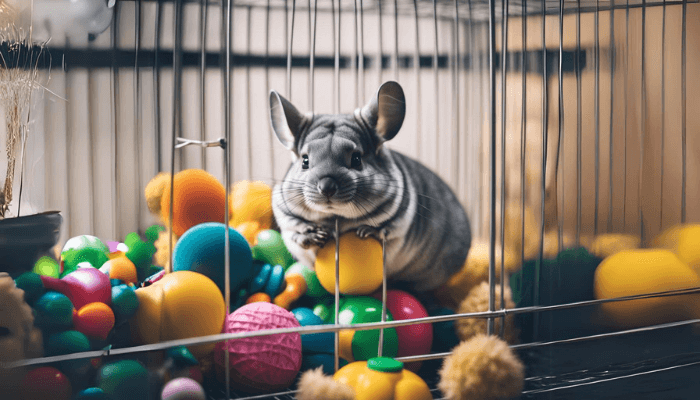
One of the most important decisions you will have to make once you have chosen to adopt a chinchilla is where your chinchilla will live, and that means choosing one of the many chinchilla cages on the market today. There are a number of qualities to look for in the chinchilla cages available, and a little forethought will provide you with one that will serve your needs (and your chinchilla’s) more than adequately. As a general rule, larger cages are better. If you opt with a smaller cage, 2x2x3ft or smaller, it’s important to allow your chinchilla plenty of time to roam around your home or apartment. Chinchillas like to climb and jump around. To keep your chinchilla happy, it is important that your chinchilla cage has several levels with ramps leading up to them. Any pet store that carries cages for rodents should have one that will serve your purposes perfectly. Wire cages are very popular, but to avoid harming the chinchilla’s feet, newspapers should be layered along every horizontal surface with exposed wire. These newspapers should be changed weekly when you clean the cage. Some wire cages have an extra compartment in the bottom with a plastic tray to ease cleaning, and many chinchilla owners find these to be ideal.
More important than the cage itself is how you decide to furnish it. At the very least, any chinchilla cages should have a food bowl, a water bottle, chew toys, some sort of bedding, and a box for the chinchilla to sleep in. Many pet supply stores sell small wooden boxes with holes specifically for this purpose, but many people find that a cardboard twelve-pack soda box works just as well, if not better. Chinchillas love to chomp on them! It’s good for their teeth, and in the long run could save you hundreds of dollars on costly veterinary bills. If you decide to use a cardboard box, make sure you change it every several weeks. Even if you want to use a wooden box, you might consider using a cardboard one temporarily, as unlike a wooden box, a chinchilla can push a cardboard box around its cage and show you where you should place its home in the cage.
Placement of the cage is another important decision. You should do your best to make sure your chinchilla is comfortable; as owners can tell you they stress easily, and any extra steps you take now will reduce difficulty in training and result in a calmer animal that is more easily handled and likelier to snuggle up to you at the end of a long day. That means finding someplace cool, out of the sun, and quiet, away from loud children, road noise, stereos, etc. Temperature deserves special consideration, as chinchillas hail from the high Andes Mountains. Any owners whose home reaches temperatures above room temperature (72F) should invest in one or more chilling pads, small slates of granite kept in the fridge until use and then placed within the chinchilla’s box when temperatures rise.
Chinchilla cages come with many other options, but these are the necessities. Though sorting through the options available in chinchilla cages can at first be daunting, a little bit of effort before you bring your furry friend home can maximize the amount of pleasure both you and your chinchilla receive from your relationship.
Tags: buying chinchilla cages, Chinchilla Cages, Chinchilla Care, Chinchilla Food, Facts about Chinchillas
The size of your Rabbit The amount of Rabbits that will be included Your hutch is made from durable materials that is non-toxic Easy access to the inside for cleaning Level of safety from wild predators There wants to be enough of room for feeding and water bowls
It is also recommended, you should as well consider how active your Rabbit is. If your Rabbit is lazy and likes to rest a lot, then the height of the hutch you purchase needs not to be important. If your Rabbit is active, you should make for sure that the height of the hutch provides sufficient head room for the Rabbit to leap or stand up on its back legs.
Cages can be just as hard to choose. Pet rabbits that will be kept in your house will want a cage. The sizing of the cage will be decided by the room you have in your home for the cage and the number of Rabbits you decide to keep.
Rabbit cages come in many sizes. If you buy a smaller breed Rabbit, a 24 x 36 inch cage will be sufficient. If the Rabbit you buy weighs, or will weigh 8 pounds or more, then you will ask a bigger cage. A 30 x 36 inch cage should be okay. Wire cages are ideal, but you want to select a wire bottomed cage that includes some type of solid surface in in the bottem of it. This make it far easier to clean if you are going to keep it inside.
Runs can also be used for Rabbits and there are there are many runs that are available for indoor and outdoor use. All a run is, in a nutshell, is a form of playpen for your small animals. Runs are normally made from tall wire with open tops and bottoms. A run offers your Rabbit with the chance to exercise and run about outside of the limits of their hutch or cage, without danger.
By: Bella Holly
It’s surprising to realize that very few people actually know what a chinchilla is, often mistaking it for another animal entirely. There really aren’t a great deal of people who really know what a chinchilla is or what it does for that matter. Some people mistake them for bunnies, while others may even think they resemble a squirrel. The care of a chinchilla is not an entirely difficult process, however there are some necessary steps to follow.
One of the most noticeable, and possibly the most annoying habit that chinchillas possess is the inability to control their chewing instinct. A chinchilla will literally chew almost anything, as this is its way of exploration. Some take annoyance from this habit, but it can be quite a cute thing to see when the chinchilla uses its hands to hold the object it nibbles so furiously at. This habit can be much more bearable if you keep items around that are safe for the chinchilla to chew, and present them to him purposely. Feeding a chinchilla could help to prevent the chewing, but it really is a natural process for them.
Besides chewing, it is also imperative that you provide your chinchilla with a regular bath of dust. This bath is nature’s way to protect its fur and keep the outer coat healthy. Just as we bathe our bodies to keep them clean and our skin healthy, chinchilla’s need the same for their coats. So make sure to maintain a dust bath schedule with your pet chinchilla.
The socialization process is also important no matter the animal involved in the process. All pets need certain levels of social interaction to really get accustomed to their new homes. This can be accomplished by simply letting them eat from your hand or even letting them have an adventure or two outside of their cages. If you do decide to let your chinchilla venture about the house, it’s a smart idea to set up barriers around the area safest for your chinchilla to roam around. A playpen can work great, just remember the chinchilla’s chewing habit!
Chinchillas really do make great pets! You are sure to find a great deal of pleasure in owning one as long, as long as you keep him happy. A chinchilla’s happiness is simple: keep him healthy and make sure to give him plenty of attention. Just keep these pet chinchilla care tips in mind and you’ll do fine!
Article Source: http://www.uberarticles.com/articles
For more information about pet chinchilla care, we recommend you visit chinchillacareguide.com.
Tags: chin care guide, Chinchilla Cages, Chinchilla Care, Chinchilla Food, feeding a chinchillaI just got a chinchilla, she’s a few months old. My boyfriend has a chinchilla and she’s about eight. Is it alright for them to play together or should they be slowly introduced due to the age gap and the fact that they don’t know each other?
Chins do not play like dogs or some other pets. Female chins are very territorial and will try to run off other that come near them. At 8 yo I bet your bf’s chin will not welcome a temporary visitor, and this "play time" will just stress out both chins. If you are going to introduce them it will take a long adjustment period and then they should be left together once the bond is formed.
1.) When will my chinchilla get used to me and let me pick him up? I have had him for about 9 hours. He squeaks and runs when I try to tuch him.
2.) Is it safe to put a stuffed animal in the cage with him?
3.) If I let it loose in my room, is it going to poop all over my room?
4.)It keeps sitting next to the water bottle and getting himself wet. Is this ok? I heard water makes their hair fall out?
5.) Do they like those wheels that they run in inside the cage and those balls that they run in on the floor?
6.) What kind of toys should I buy him?
7.) What kind of treats should I buy him?
8.) Is this sleep house ok? http://i7.tinypic.com/2sblxqp.jpg
So how do I let him have "outside of cage" play time without him peeing and pooping all over my room? I have to keep him in my bedroom. The rest of the house is occupied by 3 cats, a dog, and 5 very noisy people.
1. It really depends on how much human interaction he had before you. Whatever you do, don’t force yourself on him! It will just scare him and will then take longer for him to trust you. Move slowly and speak softly around him. Start giving him treats through the cage (a raisin will work best). Over time, open the cage door and let him come to you to get the treat. Then, over the next few days, start putting the raisin higher and higher up your arm, so that he has to come out and up your arm to get it. Again, speak softly as he comes out and don’t make any sudden moves that might scare him. You can try petting him, but move slowly and don’t force him to let you pet him. He will eventually come to trust you, usually in about a week, maybe longer. This is how I tamed my chins. Also, don’t force him to come out of his cage. He’ll probably want to stay in it – his safe place – for awhile. You can leave the cage door open and, if he wants to, he’ll come out on his own, but when he does (if he does), just let him nose around. Try to ignore him and let him explore his new surroundings without interfering.
2. I wouldn’t, he’ll probably chew on it and it’s not good for him to eat the fabric, it could possibly block him up.
3. Yes, but they’re like little, uncooked rice pellets, nothing a dust buster can’t pick up.
4. Chinchillas not being able to get wet is a myth. It’s not going to hurt them to get wet, they can even be given a water bath (but ONLY when absolutely necessary). They just need to be dried thoroughly and don’t let them catch a chill while wet. Their fur will NOT fall out, and it will NOT lead to fungus, pneumonia, or death. Try raising the water bottle so he can’t rub his body against it. It should be high enough that he has to stand on his hind legs to reach it, but without stretching or straining to reach it (probably about 6 to 7 inches, depending on how tall he is, from the bottom of the cage floor).
5. Yes, they like the wheels. Something 15 to 18 inches in diameter is best and preferably something not plastic. http://www.chinchillas.com/estore/SearchResult.aspx?KeyWords=wheel
http://www.chinworld.com/Merchant2/merchant.mvc?Screen=PROD&Product_Code=CW030010&Category_Code=CW03
NO, they CANNOT have those balls!! The balls are usually too small and they can overheat in them. Do NOT use the balls!
6. Things for them to climb on and/or chew are best.
7. They love raisins, papaya, carrots, celery, fresh and dried fruits (especially apples), dried rosehip, and sunflower seeds to name a few things. Just go easy on the treats – they can become junk food junkies and won’t eat their ‘real food’ if given too many treats.
8. In my opinion, no. Chinchillas chew on everything and the plastic is not good for them. It can, over time, be fatal to them. A wooden one would be best. You can make (or have someone make) one out of pine or buy one already made at a pet shop.
My chinchilla is often bored I feel and so I want to add toys to his cage. However my mom doesn’t want to spend money on a pet. What are some common household goods that a chinchilla would find entertaining?
No socks. Socks have loose fibers in them that a chin can ingest that will cause a blockage in the intestines. Stay away from material things unless it’s made from fleece.
If you could spend even a couple dollars, big pieces of PVC pipe make wonderful tunnels for your chin. You can even take boxes, cut holes in the end, put the PVC pipe between the two holes and make a fort with a tunnel! They love stuff like that.
Do you have any 2 x 4′s lying around? You could build him some steps, a balance beam, a jungle gym out of them. You could really have fun creating stuff for him to play on. You could also use that PVC pipe again on a 2 x 4 creation.
Other than that, yes, the paper towel rolls and the toilet paper tubes are lots of fun. Try stuffing one full of hay and put a bite sized nonshredded wheat in it. They will dig and tear at it until they find the "prize" in the middle.
I’d like to ask though, if your mom won’t spend any money on a pet – what will you do if your chin needs veterinary attention? Will he just have to suffer because mom feels it’s an expense she doesn’t want? Just something to think about.
If you’d like more ideas on chin toys and have more questions about chinchillas, please join http://www.chins-n-hedgies.com. There is a wealth of ideas on this forum, with lots of experienced breeders and pet owners who love to help.